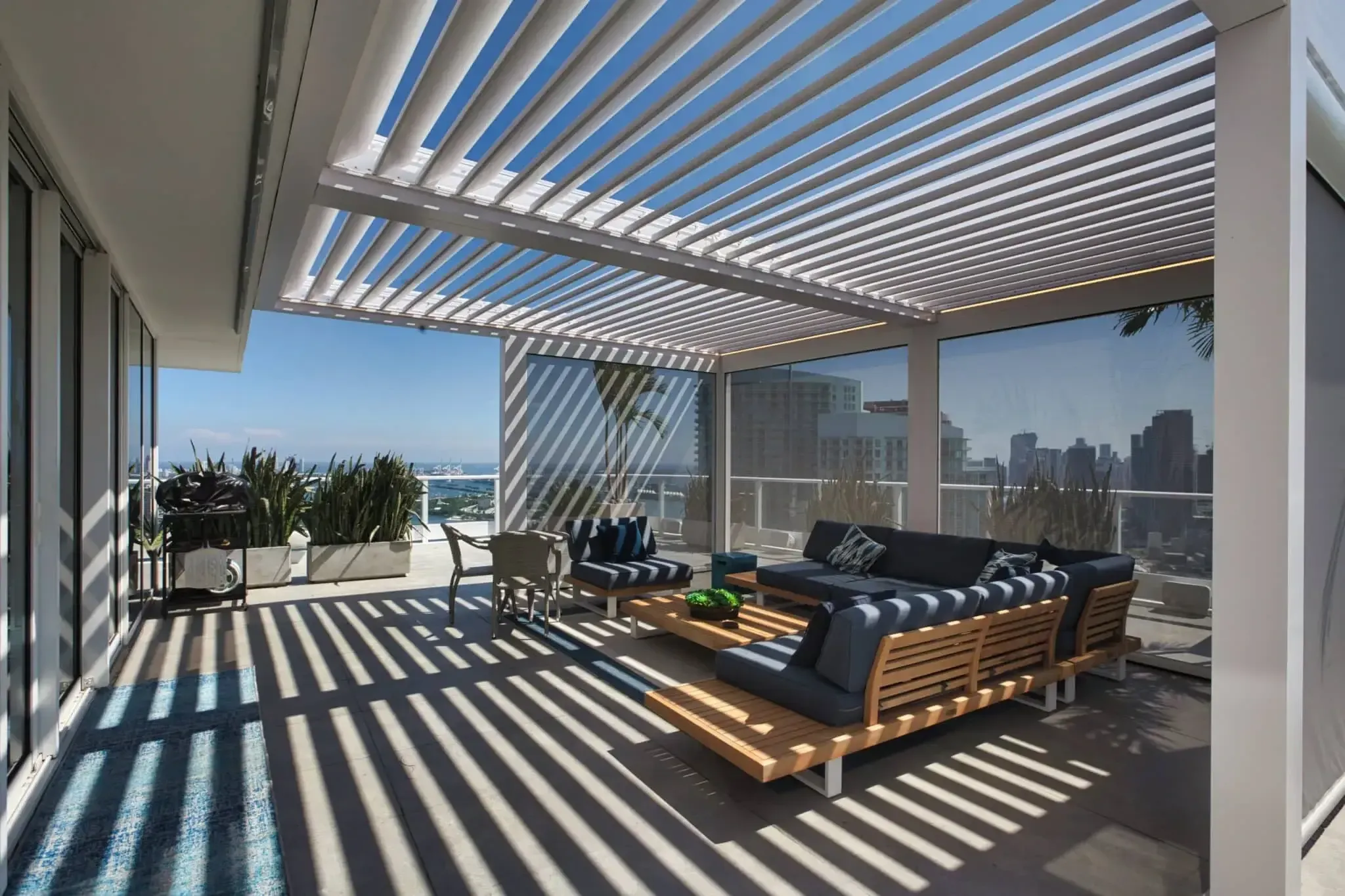
A traditional pergola can add definition and partial shade to a patio, but the amount of overhead coverage stays largely the same as conditions change.
A louvered pergola takes a different approach.
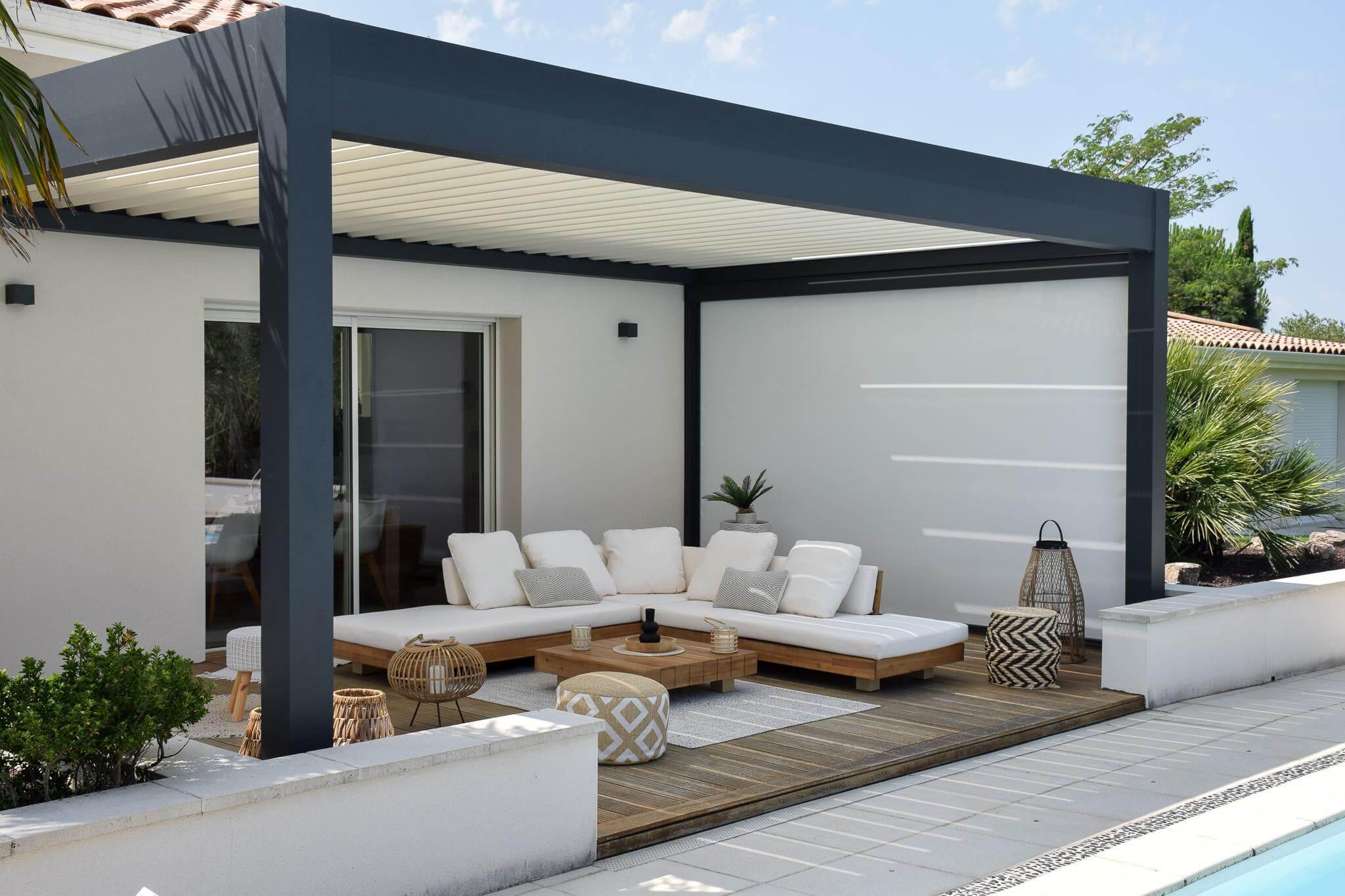
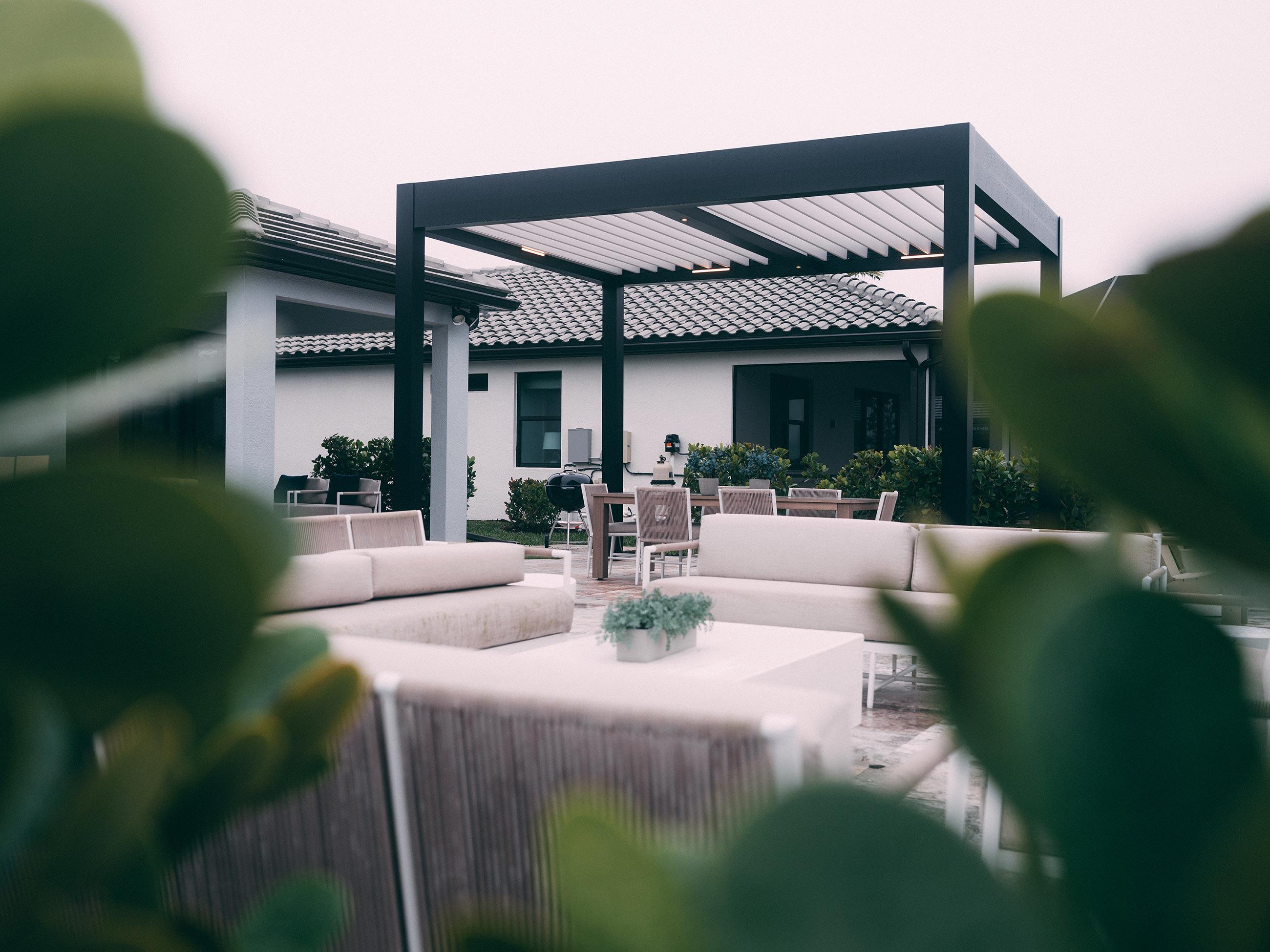
Instead of a fixed or open roof, a louvered pergola uses adjustable aluminum slats, called louvers, that rotate to control sunlight, shade, airflow, and rain protection. With a motorized louvered pergola, you can adjust the roof using a remote or compatible controls as the weather changes.
That flexibility can make a louvered roof a practical choice for patios, outdoor kitchens, pool areas, and other outdoor living spaces where you want more control over the conditions overhead.
What Is a Louvered Pergola?
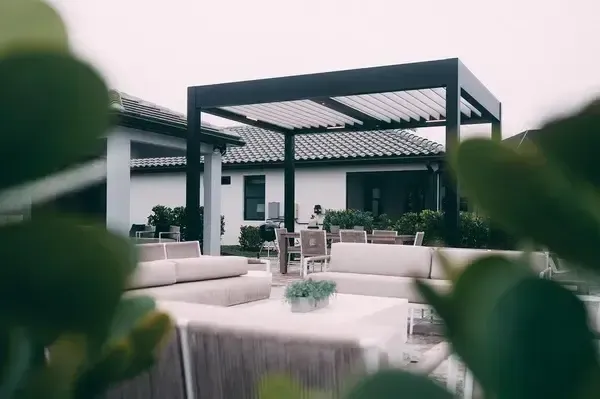
A louvered pergola is an outdoor structure with an adjustable roof made from a series of rotating louvers. Unlike a traditional pergola with fixed overhead beams or slats, the louvers can change position depending on how much sun, shade, or ventilation you want.
-
Open the louvers to bring sunlight and air into the space.
-
Angle them to reduce direct sun while maintaining ventilation.
-
Close them when you want maximum overhead shade or protection from rain.
Most modern motorized louvered roof systems use aluminum rather than wood, as powder-coated aluminum provides the strength and consistency needed for moving roof components while offering lower maintenance, weather protection, and good resistance to outdoor corrosion.
How Does a Louvered Pergola Work?
The basic idea is simple: instead of having a roof that is always open or always closed, a louvered pergola lets you change the roof position.
The Adjustable Louvered Roof
Parallel aluminum louvers (similar to slats, blades, or fins) span the roof of the pergola and connect to a motorized operating system. When activated, the louvers rotate together to change the amount of overhead coverage.
Zinga's Z-Louver Premium, for example, uses motorized louvers that can rotate up to 90 degrees.
That gives homeowners several ways to use the same outdoor space:
-
Open the louvers when you want sunlight and maximum airflow.
-
Angle the louvers when you want to cut glare or direct sun while allowing air to circulate.
-
Close the louvers when you want continuous overhead coverage for shade or rain management.
Instead of accepting whatever conditions a fixed roof provides, you can adjust the pergola around the way you're using the patio.
How Water Drainage Works
Closing the louvers also changes how the roof handles rain.
On a properly designed louvered roof system, closed louvers overlap or interlock to direct rainwater toward integrated drainage channels. Water then moves through the pergola's gutter and drainage system and away from the usable space below.
Drainage design matters because rainwater needs a controlled path out of the roof. A louvered pergola can provide useful rain protection when closed, but its capabilities depend on the specific system and conditions. It shouldn't automatically be treated as equivalent to a permanent fixed roof in every type of weather.
What Are the Benefits of a Louvered Pergola?
The biggest benefit is control. Rather than designing a patio for one set of conditions, you can adjust the roof as those conditions change.
Control Sun and Shade
Direct afternoon sun can turn an otherwise comfortable patio into a space nobody wants to use.
With adjustable roof slats, you can change the roof angle as the sun moves. That can be particularly useful over outdoor dining areas, kitchens, seating areas, and pools where shade needs may change throughout the day.
Maintain Airflow and Ventilation
A solid patio cover provides shade, but it also creates a permanently closed roof.
Louvers provide another option. Tilting them can block some direct sunlight while leaving openings for warm air to escape and breezes to move through the outdoor living space.
Add Rain Protection When Needed
When rain starts, compatible louvers can close to create overhead coverage while the pergola's drainage system channels water away.
That doesn't make every louvered pergola appropriate for every storm. Wind and rain performance varies by model, engineering, installation, and local conditions.
Use Your Outdoor Space More Often
Ultimately, louvers are only useful if they make the patio more comfortable.
-
Sun coming in? Adjust the roof.
-
Need more ventilation? Open the louvers.
-
Light rain starting? Close them.
-
Nice evening outside? Open the roof again.
That ability to respond to changing conditions can help turn a patio from an occasionally comfortable space into one you can enjoy more often for outdoor activities.
Motorized Controls, Sensors & Smart Pergola Features
A motorized louvered pergola uses an electric motor to adjust the roof angle.
Depending on the system, controls can range from a simple remote or wall control to app-based controls, compatible smart home systems, and weather sensors.
It's useful to distinguish motorization from automation.
-
Motorization moves the louvers.
-
Automation allows the system to respond or operate without you manually adjusting it each time.
For example, compatible smart sensors may allow certain pergola systems to respond to changing weather conditions.
Smart features vary considerably between models and configurations, so don't assume every “smart pergola” supports the same apps, sensors, or smart home ecosystem.
Confirm compatibility for the specific motorized roof system you're considering.
Aluminum vs. Wood Pergolas: Maintenance and Durability
Wood and aluminum can both create attractive pergolas, but they have different maintenance requirements.
Wood Pergolas
Wood offers a natural appearance and can work beautifully with traditional home designs.
Depending on the wood species, finish, climate, and exposure, however, it may require periodic staining, sealing, painting, or other maintenance.
Aluminum Pergolas
Powder-coated aluminum doesn't require the same routine refinishing and offers good resistance to rust and corrosion. It's also well-suited to the precision required for moving louvers, motors, and integrated drainage systems.
That doesn't mean an aluminum frame and louvered roof pergola is maintenance-free.
Periodic cleaning and inspection are still sensible, especially around the aluminum louvered roof, its internal gutter system, moving components, and fasteners.
What Can You Add to a Louvered Pergola?
The adjustable roof system can be just the beginning.
Depending on the pergola system, homeowners may be able to add features that solve a different outdoor-living problem, each, such as:
-
LED lighting: Makes the space more useful after sunset.
-
Outdoor-rated fans: Fans can add airflow when there isn't much breeze or the roof grid is closed.
-
Infrared heaters: Can make cooler evenings more comfortable.
-
Motorized screens: Provide additional shade, insect protection, and daytime privacy while maintaining airflow.
-
Privacy walls: Help block unwanted sightlines.
These accessories can help a pergola function less like a cover over a patio and more like a defined outdoor living space.
Considerations Before Installing a Louvered Pergola
A pergola should be designed around the home and the way you plan to use the space, not simply around the largest structure that will fit.
Size and Placement
Consider patio dimensions, doors and windows, walkways, outdoor kitchens, pools, furniture, and where support posts can be located without disrupting traffic through the space.
Also consider whether the pergola should be attached to the home or freestanding.
Weather and Structural Requirements
Wind, snow load, anchoring, soil or foundation conditions, and local building standards can affect the design and installation requirements.
Performance ratings should always be tied to the specific pergola system. A custom-engineered pergola may have very different wind or structural capabilities from a standard-size system.
Permits and HOA Requirements
Depending on where you live, installing a pergola may require permits, engineering documents, setback compliance, wind- or snow-load documentation, or HOA approval.
Check those requirements early rather than discovering them after the pergola has already been ordered.
Color and Home Design
A pergola is a large architectural feature, so color deserves more consideration than choosing a finish from a digital representation alone.
Think about how the posts, beams, and louvers coordinate with the home's trim, soffits, siding, masonry, pavers, and outdoor furnishings. Where physical aluminum samples or color charts are available, viewing them against the actual home can make the decision easier.
How Much Does a Louvered Pergola Cost?
The cost of a louvered pergola depends on its size, whether it's standard or custom-built, site and engineering requirements, roof system, finish, installation, and accessories such as lighting, screens, fans, heaters, or privacy walls.
Zinga's currently offers:
-
Z-Louver Standard starting at $13,995
-
Z-Louver Premium, customized pergolas, starting at $18,500
Final project costs depend on the configuration and installation requirements.
Rather than comparing base prices alone, compare what each system includes and whether its size, performance, customization, and features fit the space you're trying to create.
Which Zinga's Pergola Is Best for Your Outdoor Space?
Zinga's offers three aluminum pergola and patio-cover options designed for different priorities.
Z-Louver Premium
Z-Louver Premium is Zinga's fully custom motorized louvered pergola. It's designed for homeowners who need custom sizing or configurations and want greater flexibility in finishes, accessories, and performance.
It also comes with the highest wind rating among the pergola models (Miami-Dade NOA), and can incorporate features such as integrated LED lights, fans, heaters, privacy walls, motorized screens, and clear vinyl enclosures.
Z-Louver Standard
Z-Louver Standard provides the core benefits and potential add-ons of a motorized louvered roof in pre-engineered standard sizes.
It's designed for homeowners who want adjustable sunlight, airflow, and rain management while prioritizing a more approachable price and faster installation timeline over extensive customization.
Z-Roof Fully Enclosed Pergola
The Z-Roof is a fixed, insulated aluminum patio cover, and not a louvered pergola.
That makes it an alternative for homeowners who want permanent overhead coverage rather than an adjustable roof. If you already know you want the patio covered all the time, a fixed-roof system may make more sense than paying for a slatted roof you don't need.
With Zinga's Help, You'll Know If a Louvered Pergola Is Right for Your Home
A louvered pergola is worth considering when you want more control over an outdoor space than a traditional pergola or fixed patio cover can provide.
The right system depends on your patio size, sun exposure, local weather, home design, budget, and how much customization or automation you want.
Zinga's offers both custom and standard motorized louvered pergolas, along with fixed-roof alternatives.
During a complimentary in-home consultation, we can evaluate your space, discuss how you want to use it, review design and accessory options, and help determine which pergola configuration makes the most sense for your home.