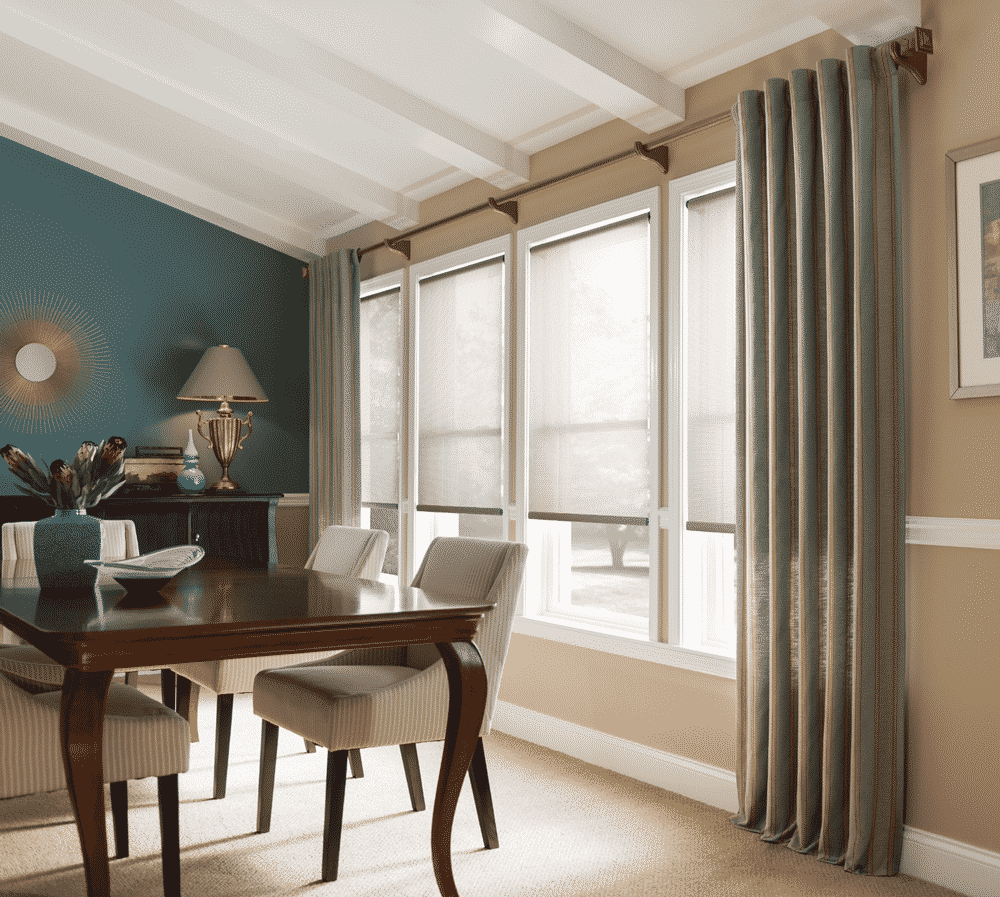
If you've ever stood in a room thinking, “Something about these windows just isn’t working,” you're not the only one.
The right window treatments have to juggle light, privacy, heat, kids’ safety, screen glare, moisture, and now even smart-home routines. And because every room serves a different purpose, the same solution rarely makes sense for every window in the house.
This guide is built to take some of that pressure off. Instead of guessing product by product, you’ll walk through your home room by room, use a simple checklist, and match each space to the kind of window covering or treatment that fits how you actually live there.
By the end, you’ll know where you truly need blackout, where glare control is enough, which materials make sense in kitchens and baths, and when it’s worth bringing in a professional to fine-tune the details.
Why One-Size-Fits-All Window Treatments Fail Room by Room
Using the same shades or blinds on every window usually leaves a few rooms either too bright, too dark, too exposed, or too impractical for everyday life. Different rooms have varied functions, such as sleep, work, cooking, bathing, and entertaining, which necessitate distinct types of light control, privacy, and insulation.
One-size choices often falter in recognizable ways:
- Living rooms: Excessive afternoon TV glare and faded furniture due to inadequate UV protection.
- Home offices: Screen glare and harsh backlighting during video calls can be mitigated with adjustable solar shades or Roman shades.
- Dining areas: Guests squinting into the sun or feeling "on display" without proper privacy control.
- Street-facing bedrooms: Silhouettes visible at night through sheers, when blackout curtains would offer better privacy.
- Kids' areas and stairs: Older corded treatments, such as pull-down shades or mini blinds, which can be safety hazards, are better replaced with motorized blinds.
Don't Forget That Window Treatment Materials Matter
Material and fabric choices matter too. A treatment that works beautifully in a dry living room may not handle kitchen steam or bathroom moisture well. For instance, wood blinds and natural woven shades provide a decorative look but may not suit humid areas, whereas cellular shades excel in energy efficiency and moisture resistance.
Once you recognize these differences, it becomes clear that “one look for every window” can quickly become “one set of compromises in every room.” Opting for custom window treatments allows for a precise fit in both function and style, enhancing both your home's interior design and its practical needs.
A Simple Room-by-Room Window Treatment Framework
The easiest way to stop guessing is to run the same quick framework on every room before you think about products. That keeps decisions grounded in how you actually use each space, not just what looks good in a photo.
For each room, start with three questions:
- What happens here
- When does it matter most
- Who needs to be comfortable?
A bedroom used mostly at night has different needs than a kitchen used all day, even if the windows are identical.
Then walk through this checklist:
- Room function: Sleep, work, relaxing, entertaining, bathing, and chores?
- Who uses it and how often: Adults, kids, guests, pets, or a mix?
- Orientation and light: Which way do the windows face, and when is the sun a problem?
- Privacy: Who can see in during the day and at night?
- Moisture and mess: Steam, splashing, grease, or heavy traffic?
- Safety: Children, pets, stairs, or open flames nearby?
- Operation: Are any windows tall, hard to reach, or adjusted several times a day?
- Style and budget: How important is this room visually, and how long should the treatment last?
Write your answers down, room by room. That becomes a simple decision sheet you can use on your own or hand to a consultant, so the conversation starts with “how you use the room,” not “which product do you like?” It’s also your roadmap when you start comparing blinds, shades, shutters, drapery, and motorized options.
Best Window Treatments by Room at a Glance
|
Room |
Usually Prioritize |
Options to Consider |
|
Bedroom |
Darkness and privacy |
Cellular or roller shades, room-darkening or blackout shades, drapery |
|
Living room |
Daylight, glare control, view |
Solar shades, Zebra shades, roller shades, blinds, layered drapery |
|
Home office |
Screen comfort and adjustable light |
Solar or Zebra shades, light-filtering shades, blinds |
|
Kitchen |
Cleanability and moisture tolerance |
Faux wood blinds, composite shutters, roller shades |
|
Bathroom |
Privacy and moisture tolerance |
Composite shutters, faux wood blinds, moisture-tolerant shades |
|
Kids’ room |
Privacy, sleep, and safer operation |
Cordless or motorized shades, room-darkening treatments |
|
Tall or hard-to-reach windows |
Easy operation |
Motorized shades or blinds |
Think of this as a starting point, not a rulebook. Window size, sun exposure, privacy needs, architecture, and the way you use the room can all change the recommendation.
Light and Privacy: Choosing the Right Custom Window Treatments for Each Room
Most homes aim for the same basic needs: bedrooms that truly get dark, living areas that stay bright without glare, and bathrooms that offer both light and privacy.
Once you map those needs, every window covering product choice gets easier.
Bedrooms and Nurseries: Dark and Private
For bedrooms and nurseries, achieving room-darkening or complete blackout conditions, along with strong nighttime privacy, is crucial. Opt for blackout or room-darkening shades tailored to your window frame, often with an outside mount to reduce light gaps. Adding a layer like custom drapery panels can soften light, enhance style, and allow for privacy control during the day.
Living and Family Rooms: Comfort and Style
Living and family rooms benefit from comfortable daylight without harsh glare. Consider light-filtering shades or Zebra shades to manage light control and UV protection, which are ideal for maintaining views on large windows or doors. Layered treatments with stylish side panels or sheers can further enhance the decorative look and provide privacy during the evening.
Home Offices: Screen Comfort and Light Management
Maintain screen comfort in home offices with custom roller light-filtering shades or Zebra shades at the right openness level. These window coverings reduce screen glare, control natural light, and prevent distractions, ensuring a professional and comfortable work environment.
Street-Facing and Ground-Floor Spaces: Privacy and Light
Rooms facing the street or on ground floors require thoughtful privacy solutions both day and night. Top-down/bottom-up shades are excellent for maintaining privacy while allowing natural light to enter from above. Dual shades, traditional vertical blinds, frosted glass, or window tinting can also provide a functional and stylish mix of light and privacy.
Bathrooms and Kids' Rooms: Function and Safety
In bathrooms, prioritize moisture-tolerant wood blinds or composite shutters that provide light and modesty. Motorized blinds or shades with remote control operation are perfect for achieving this balance and are convenient for hard-to-reach windows. For nurseries and kids' rooms, consider cordless or motorized window treatments, focusing on safe operation and customized light control to support comfort and safety.
A simple "light and privacy map," indicating where blackout is needed, where glare control is a priority, and where softer privacy suffices, will help guide your decisions. Professional consultation and customization, including selecting the right fabrics, hardware, and automated systems, can enhance both the functional and decorative aspects of your home's window treatments.
Choosing Window Treatment Materials for Kitchens, Baths, and Laundry Rooms
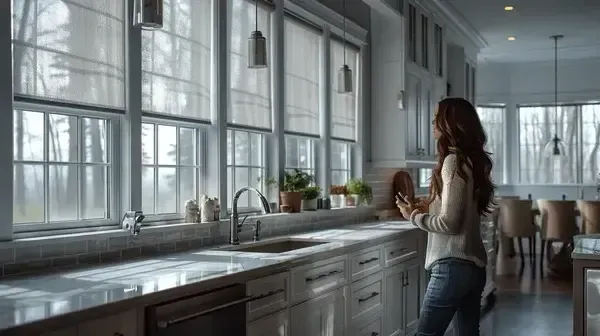
Light and privacy get most of the attention, but moisture and mess can quietly ruin the wrong window treatments. Kitchens, baths, and utility spaces are where material choice becomes especially important.
Kitchens
Anything near a sink or stove has to stand up to steam, grease, and regular cleaning.
Faux wood blinds or composite shutters, and performance roller shades are strong candidates because they can be easier to maintain and are often better suited to moisture than some natural materials.
Keep drapery and long fabric panels away from open flames and heavy splatter zones. If you love fabric, use it on safer, drier windows in the room.
Baths and Laundry Rooms
Bathrooms and laundry rooms can be especially demanding. Steam, temperature swings, and splashes put extra stress on certain materials. Natural wood and absorbent fabrics may require more careful placement and maintenance in these spaces.
Here, favor composite shutters, faux wood blinds, or moisture-tolerant roller shades. Good ventilation plus the right material goes a long way toward keeping everything looking and operating as intended.
Mudrooms and Utility Spaces
Mudrooms, back entries, and utility spaces are “workhorse” areas. They see dirt, wet shoes, pet traffic, and doors opening and closing all day. Choose treatments that can be used regularly: simple rollers, durable faux wood, or compact shutters that don’t interfere with traffic paths. Light control is usually less important here than durability and easy operation.
In these rooms, focus on:
- Durable, wipe-clean surfaces that handle dirt and moisture.
- Slim profiles that don’t catch doors, backpacks, or pet traffic.
- Simple operation when you’re carrying bags or laundry.
If you know you won’t dust intricate slats or vacuum pleats regularly, pick smoother surfaces that are easier to maintain.
When Motorized Window Treatments Make Sense
Motorization isn’t necessary for every room, but it can solve some very practical problems.
It becomes especially useful when windows are:
- Tall or difficult to reach.
- Covered by furniture.
- Opened and closed several times a day.
- Grouped together across a large wall.
- Part of a bedroom or privacy routine.
- Used by someone who would benefit from easier operation.
Motorized shades and blinds can typically be operated with a remote or compatible control system, depending on the product. Some systems may also support schedules or smart-home integration.
The real benefit is convenience and control.
A shade that is easy to adjust every afternoon may do a better job of managing glare and heat simply because you actually use it.
For many homeowners, that’s the better way to think about motorization: not as technology for technology’s sake, but as another way to make a room easier to live in.
Choosing Window Treatments for Style, Architecture, and Tricky Windows
Once the functional pieces are set, you can decide how you want the whole house to look and feel, and how to handle the windows that don’t fit a simple template. This is often where a little professional guidance keeps good ideas from turning into daily annoyances.
- Start with your architecture: A modern home with clean lines often looks best with simple roller or solar shades, slim hardware, and tailored drapery panels. A more traditional space may lean toward shutters, Roman shades, and fuller drapery. The key is choosing a small family of window coverings that repeats in logical ways, so each room feels unique but related.
- Sightlines and proportions matter: Mounting drapery closer to the ceiling and extending it wider than the window can make walls feel taller and let you stack fabric off the glass. Inside-mount shades show off nice trim; an outside mount can hide uneven openings or help reduce visible light gaps where stronger darkening matters.
- Tricky windows: Bays, corners, arches, tall windows, and wide sliders deserve their own attention. Often, the right answer is fewer, larger treatments rather than many small ones: a single wide treatment for a slider, coordinated shades across a bay, or specialty hardware that allows smoother operation around unusual openings. The goal is to keep operations simple and light gaps manageable without chopping up the view.
- In rooms with standout views, let the view win: Choose low-profile shades that roll up cleanly, slim tracks, and fabrics that don’t visually compete. Then use color and texture to tie everything back to your floors, trim, and furniture. A limited palette repeated across rooms will keep the house feeling cohesive as you move through it.
Blinds vs. Shades vs. Shutters vs. Drapery: What Works Best in Each Room?
With your room-by-room notes in hand, it’s much easier to match needs to product families. Each major category has strengths and quirks; you’re choosing the right tool for each job, not a single winner for the whole house.
Blinds
Blinds shine when you want fast view control and simple cleaning, think home offices, many living rooms, and secondary bedrooms. Wood brings warmth; faux wood is often better suited to humid or moisture-prone spaces (bathrooms and kitchens). They’re less effective for a true blackout because light can sneak between slats and around the edges.
Shades
Shades cover the window with continuous material and excel at insulation, glare control, and handling large openings, depending on the style and fabric. Cellular shades are strong candidates for bedrooms and rooms where insulation matters. Zinga's Zebra shades work well in very bright spaces where you want to keep some of the view while taming glare. Roller and Roman shades add more softness and pattern without a lot of bulk.
Shutters
Shutters are the most built-in and permanent. They offer strong durability, adjustable light and privacy, and clean lines that suit many styles. They make sense in high-impact rooms where you want a long-term upgrade, front rooms, primary bedrooms, and some baths or dining rooms where a more architectural finish makes the space feel complete.
Drapery
Drapery is the soft layer that can do almost anything: frame a view, hide hardware, add color, and deepen room darkening when lined. Even on its own, drapery can provide substantial light control and privacy, but when it's layered over shades, it becomes a flexible system. Drapery works especially well in living rooms, dining rooms, and bedrooms where you want both softness and deeper light control.
Choose Custom Window Treatments With Help From Zinga’s
By now, you probably have a clearer sense of which rooms are bothering you most, what each window needs to do, and which choices deserve a closer look.
That’s where Zinga’s can help turn a room-by-room checklist into a plan that fits your home.
With a complimentary in-home consultation, Zinga’s brings product and fabric samples directly to you, so you can compare options in the rooms where they’ll actually be used. A consultant can help you think through light, privacy, moisture, operation, style, and motorization while taking precise measurements and preparing a no-pressure quote.
Once you’ve made your selections, Zinga’s also handles professional installation, giving you one team to guide the process from product choice through the finished result.
When you’re ready to make those room-by-room decisions with an expert in your home, schedule a complimentary in-home consultation with Zinga’s.