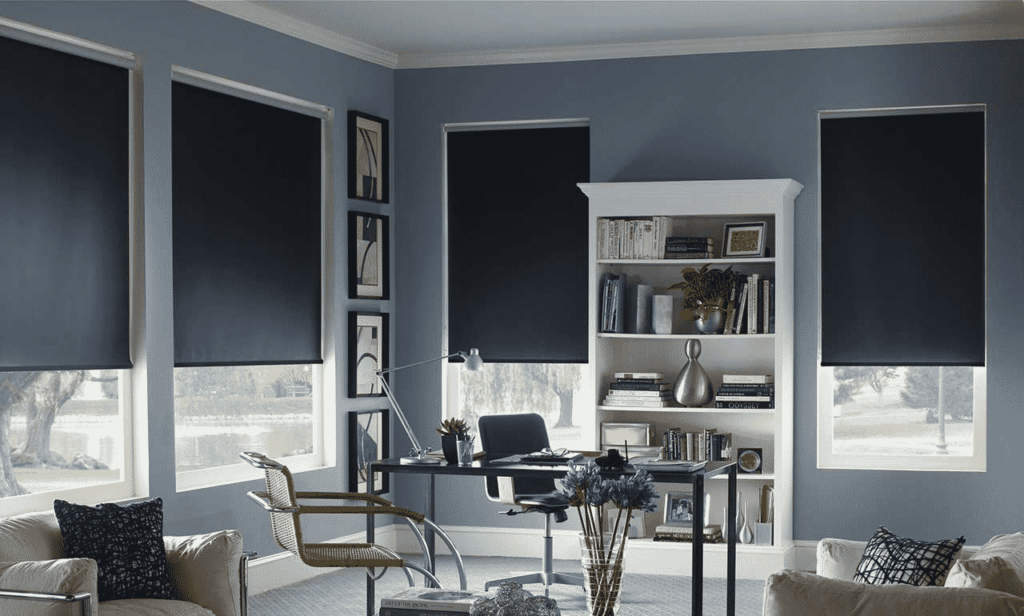
You know when a room is almost dark enough—but not quite. You pull down what was sold as a blackout blind, turn off the lights, and the window still glows around the edges. It is better than bare glass, but your bedroom, nursery, or media room never feels truly dark.
Blackout blinds or blackout shades can make a significant difference in how comfortably you sleep, relax, or enjoy a movie.
But getting the darkness you want takes more than choosing a product labeled “blackout.”
The right window treatment depends on your room, your light-control needs, and how well the treatment fits your windows. This guide explains how blackout blinds should work, how they compare with other light-control options, and what to consider when choosing a blackout solution for your home.
How Do Blackout Blinds Work?
Blackout window treatment options are designed to prevent light from penetrating through the covering, utilizing specific light-blocking materials and fit to minimize light entry around the edges.
Although homeowners often refer to various window treatments as blackout blinds (or blackout curtains), many of these products are technically fabric-based blackout shades.
Unlike traditional horizontal or vertical blinds with adjustable slats, true blackout shades use opaque sheets of fabric, not slats, that effectively block visible light.
To ensure effective blackout performance, several key elements are crucial:
-
Opaque Covering: Blackout fabric technology creates a barrier that stops light from passing through. This capability is due to the construction of the material, not merely its color. The fabric opacity is vital in achieving full blackout.
-
Continuous Light Barrier: Unlike traditional slatted window shades, a solid blackout shade or roller blinds feature no gaps that allow light to pass through, maintaining consistent light blocking across the window surface.
-
Control Around the Edges: Effective installation techniques, such as the use of side channels and precise fitting, are essential to limit light entry from the sides, top, and bottom of the window. Even with the finest blackout fabric, light can infiltrate if the shade doesn't cover the window completely.
Beyond light control, blackout window treatments offer additional benefits such as energy efficiency, total privacy, and even noise reduction, thanks to their insulating properties.
Although they are not true blackout blinds or shades, other options like cellular shades or honeycomb shades also provide a substantial degree of light absorption and thermal insulation, contributing to energy savings by reducing energy costs.
Moreover, blackout blinds can enhance décor and serve the specific needs of day sleepers, night shift workers, and media rooms, providing a practical and stylish solution for any home setting.
Blackout vs Room-Darkening vs Light-Filtering: How They Really Differ
Light-filtering, room-darkening, and blackout are often used interchangeably as blackout blinds styles, but they create very different experiences in a room.
Understanding those differences helps you choose a window treatment that gives you enough light control without making a space darker than you want it to be.
-
Light-filtering fabrics soften incoming daylight, reduce glare, and help maintain a bright, welcoming room. They are useful when you want natural light penetration without the harshness of direct sun. Privacy varies by fabric and lighting conditions, especially after dark. Examples include Zinga's Woven Wood Shades.
-
Room-darkening fabrics block more incoming light, making a room noticeably dimmer without necessarily eliminating daylight. Options like Zinga's Cellular Shades or Roman Shades can be a good middle ground for bedrooms, living spaces, or rooms where you want to reduce screen glare but don't need maximum darkness.
-
Blackout fabric technology provides the strongest light-blocking option of the three. They are especially useful when unwanted daylight interferes with sleep or when you want greater control over lighting for movies and other activities. The final level of darkness also depends on how well the treatment covers the window. Zinga's Roller Shades come with complete blackout options.
At Zinga’s, we help homeowners find the right balance between natural light and darkness, whether that means keeping everyday living spaces bright or creating a more restful bedroom.
The goal isn't to block as much light as possible everywhere, but to have the right amount of control where it matters most.
Choosing Blackout Blinds and Shades for Different Rooms
You do not need full blackout draperies or shades everywhere; your home works best when light control matches how you actually use each room. Start with the job of the space, then choose the level of darkness that supports it instead of fighting it.
Bedrooms and Nurseries
Sleep spaces benefit most from deeper darkness. Light-sensitive sleepers, shift workers, and families who prefer darker nurseries may benefit from blackout fabric plus good edge control, not just a darker shade.
That might mean an outside-mount roller shade that overlaps the frame or, where available, a specialized blackout system designed to reduce light around the edges.
If you're considering blackout blinds for a bedroom, pay attention to early morning sunlight, nearby streetlights, and any gaps around the window. For nurseries, cordless or motorized shades can also help eliminate accessible operating cords, an important consideration in rooms used by young children.
Living Areas, Kitchens, and Everyday Spaces
In living rooms, kitchens, and open-plan areas, full blackout blinds often feel unnecessary.
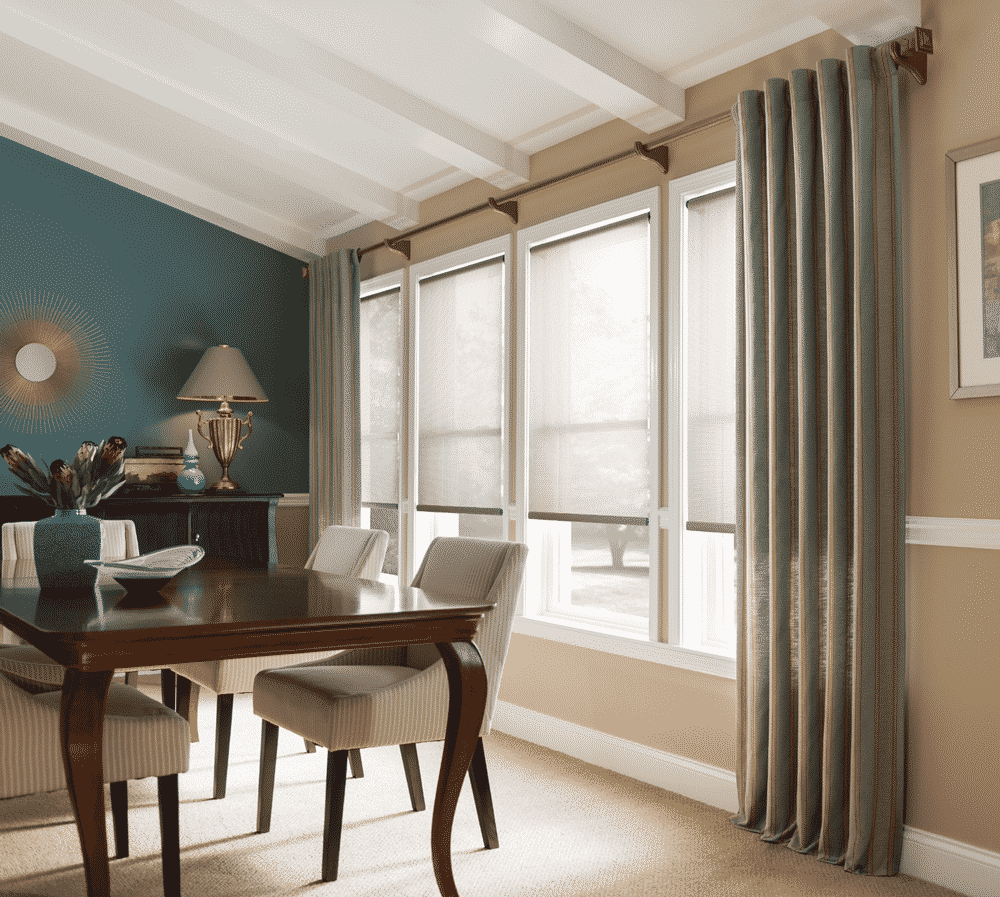
Light-filtering or room-darkening shade, like Cellular Shades or Roman blinds, alone cut glare and improves privacy while keeping the space pleasant to be in. You can still watch TV comfortably, move around safely, and enjoy natural light most of the day.
Adjustable window blinds can offer flexible sunlight control, while light-filtering shades help soften harsh afternoon glare. Remember that nighttime privacy depends on the fabric and indoor lighting conditions.
Media Rooms and Home Theaters
For media rooms and bonus spaces, think in three tiers:
-
Better TV afternoons: Good room-darkening shades that cut reflections.
-
Serious movie nights: Darker fabrics plus careful sizing to shrink light gaps.
-
Home theater darkness: Blackout window treatments with carefully planned coverage and light-gap control.
In a home theater, blackout shades can make daytime viewing more comfortable by reducing the sunlight that causes screen glare and washes out the picture.
If you are unsure where to invest first, consider which rooms are most affected by unwanted light, disrupted sleep, screen glare, or privacy concerns. Start with the room where better light control would make the biggest difference.
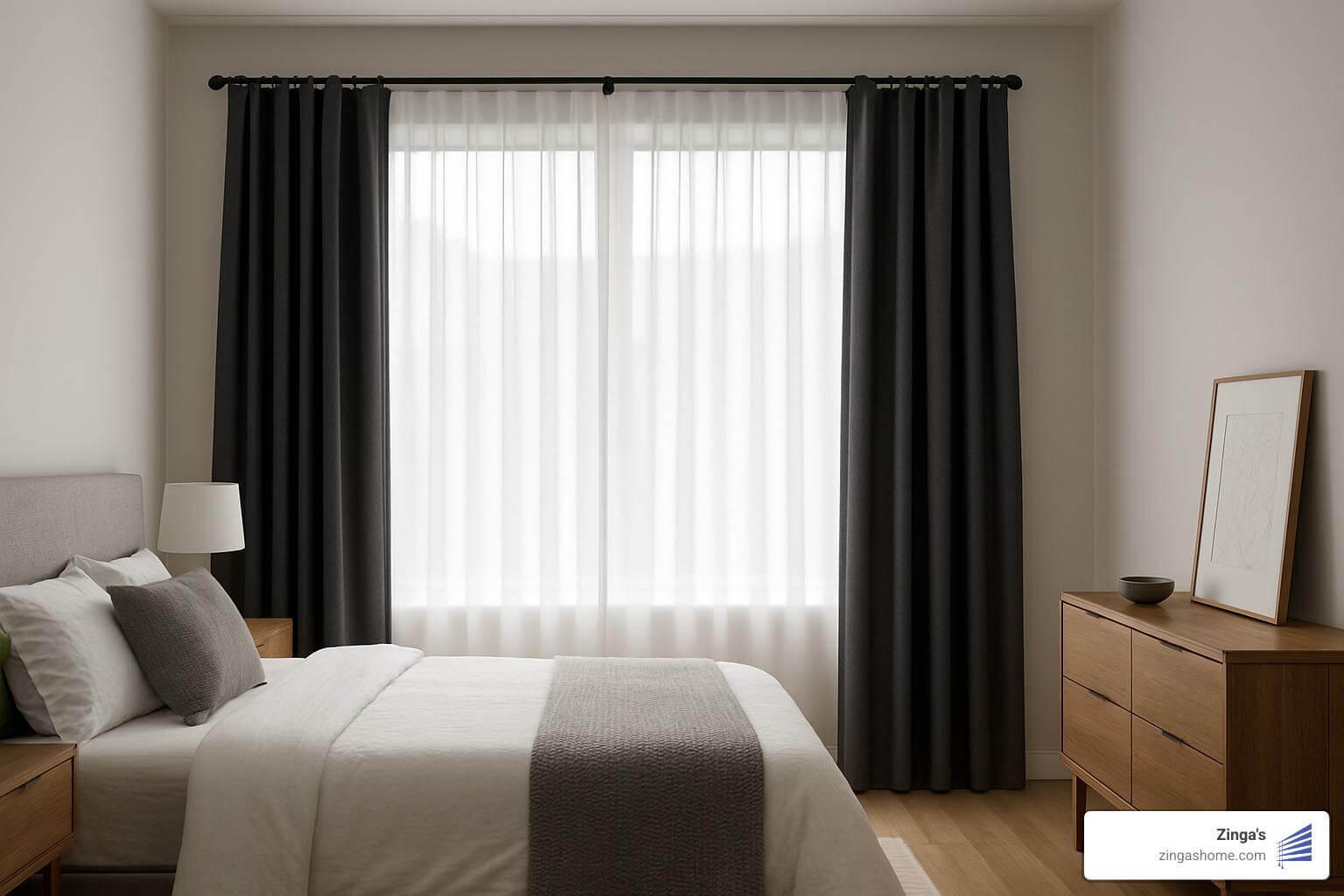
Fabrics, Liners, and Shade Types That Support Blackout
Two shades can look similar on a sample card but behave very differently once installed.
The way the fabric is built and backed determines how much light gets through, how it hangs, and how well it handles the conditions in your home.
-
Blackout roller shades may use opaque fabrics or decorative face fabrics paired with light-blocking backing layers. Those backings prevent light from passing through the material while letting you keep the color and texture you like on the room side.
-
Cellular (honeycomb) shades work differently. Their pleated pockets trap air for insulation, and blackout versions add an opaque layer so light does not glow through the fabric, but might still penetrate slightly. That can be a smart choice where you care about both darkness and bedroom or nursery temperature comfort.
-
A compatible blackout liner can also improve light blocking behind a favorite fabric, especially in drapery and some Roman shades. Instead of chasing a specific number on a spec sheet, it is usually more useful to think in terms of matching your darkness and comfort needs for each room.
If you are comparing blinds and shades, remember that traditional slatted blinds offer adjustable light control, while blackout shades are generally better suited to rooms where minimizing incoming light is the priority.
Mounting and Hardware: The Missing Half of Blackout Performance
Effective blackout is rarely just a fabric or blackout fabric technology decision; it also involves the right mounting and hardware considerations. The same window treatment material can feel very different depending on whether it is mounted inside the window frame, outside the frame, or paired with light-blocking side channels to reduce light penetration.
-
Inside-mounted blackout roller shades sit within the window frame and provide a clean, built-in look, but they often leave a narrow gap down each side and along the top where the headrail or roller sits. In bright conditions, those lines can cause significant light penetration.
-
Outside-mount blackout roller shades overlap the window frame and wall, helping reduce light infiltration around the opening. Some specialized blackout systems include features designed to limit light around the top, sides, and bottom, using light-blocking materials. These configurations can be particularly useful in bedrooms, nurseries, and dedicated media rooms, contributing to improved blackout performance and energy efficiency.
Even with these features, the final level of darkness and thermal insulation depends on the window size, mounting conditions, and installation techniques. Proper installation ensures that homeowners can achieve the desired room-darkening effect, energy savings, and noise reduction.
Common Blackout Blind Mistakes You Can Still Fix
If your “blackout” room is still bright, you are usually fighting a few predictable sizing or installation mistakes. The good news is that many of them can be improved without starting from scratch.
Common problems include:
-
Measuring without accounting for coverage and leaving unnecessary gaps around the window
-
Choosing room-darkening fabric for a space that truly needs blackout.
-
Using one product on every window and ignoring tricky shapes or exposures.
-
Choosing slatted blinds for complete darkness without accounting for light between the slats.
-
Mounting hardware without enough overlap creates bright lines around the opening.
Sometimes, careful adjustment of brackets or a wider replacement shade is enough. Other times, a different mount style or a more specialized blackout treatment may be the more reliable fix.
If replacing everything is not practical right now, layering blackout curtains over an existing treatment may help reduce the brightest light gaps.
Should You DIY Blackout Blinds or Work With a Specialist?
You can improve light control with off-the-shelf options, especially in simpler rooms. But achieving a high level of darkness, especially on large openings, corner windows, or rooms where sleep really matters, usually benefits from professional measuring, hardware selection, and installation.
A good window professional does more than bring a tape measure. They look at frame depth, obstructions, trim, wall texture, and the way the sun actually hits each opening, then match fabric, mount style, and hardware to how you use the space.
That kind of planning matters more as you add motorization or multiple treatments in one room.
If you are debating between another round of trial and error and getting it right the first time, having a specialist like Zinga’s look at your windows can help you understand what will actually work in your space.
That guidance can make it easier to choose the right materials, mounting options, motorized or mechanical operation, and level of light control without unnecessary guesswork.
When You Want Real Blackout, Not Just Darker Shades
If you can already picture the rooms that are working against you—the bedroom that never feels fully dark, the nursery that glows at nap time, the media space that never quite loses that haze on the screen—that's a good first step.
The next one is finding an approach that works for those specific windows and how you use each room.
This is where an in-home consultation makes a difference. In a Zinga’s consultation, you walk a specialist through how you use each space and when light causes problems; they measure carefully, evaluate the window frames and exposure, then recommend suitable light-filtering, room-darkening, or blackout options based on your needs and available products.
There is no pressure to make every window completely dark or finish the whole house at once. You can start with the room that bothers you most and phase the rest as it makes sense. If you are ready to see what better light control could feel like in your home, schedule a free in-home consultation with Zinga’s to explore your options.